History of the Ukrainian Kozak - Kozak Mamai


Kozak-Mamai (Mamai the Cossack) is an image often portrayed in folk paintings in Ukraine in the 17th-19th centuries. It became so popular that it was regarded as a sort of national Ukrainian symbol. Kozak-Mamai was painted on the walls of houses, on doors and windowsills, on tiles and chests, on many household objects, even on bee hive houses in apiaries. It would be premature to say that we know all there is to know about the genesis of these representations and reasons of their popularity. There is enough evidence to suggest that the representation of Kozak-Mamai goes back to very early times. It was known to many ethnic groups that lived in the territory of the present day Ukraine in the first millennium BC and the first millennium AD.

So, Kozak-Mamai is a result of complex interactions of several ethnic groups and cultural traditions. Though we cannot give yet a comprehensive answer to the question which factors contributed to such a wide and consistent popularity of the Kozak-Mamai image that persisted for centuries, we know for sure that Kozak-Mamai is a deeply symbolic image, a concentrated expression of Ukrainian people’s reflections over their ethnic identity.

The Cossack (and before the Cossack, a free warrior ready to stand up in defense of his homeland) was an embodiment, in the collective consciousness of the people, of spiritual strength and adamant will to fight invaders and oppressors. In later times, when the Zaporizhzhya Cossacks were disbanded by the Russian Imperial authorities, Kozak-Mamai was looked upon as a reminder of the heroic past. In spite of the fact that Kozak-Mamai was usually represented in the state of thoughtful repose rather than in battle with the enemies, the onlooker could feel there was strength and readiness behind the peaceful front.

The Cossacks upheld the moral precepts and cultural traditions of their ancestors, among them the ideals of camaraderie and collectiveness. In the Cossack collective consciousness the pagan mythological and poetic view of the world got mixed up with moral and ethic principles of Christianity. The Cossack mentality reflected the entire scale of Ukrainian national values, in the foundation of which there were Ukrainian concepts of God, Love, Homeland, Land as Mother of all Life, Native People, Statehood, Independence, Freedom, Aspiration to Be Liberated from Foreign Domination, Justice. The Zaporizhzhya Sich (a self-governed Cossack Community in Southern Ukraine centered on the Dnipro River) turned to be a spiritual center around which the ethnic awareness and national mentality of the Ukrainian nation was formed.Practically everything that can be seen in Kozak-Mamai pictures has some symbolical significance. For example, there is a tree, usually appearing in Mamai pictures, mostly oak. This tree, one of the central traditional symbols of the Ukrainians, symbolizes strength and longevity of the nation on the one hand, and on the other it is a universal symbol of life, of the Universe, its structure and its life cycles.

Another important element in Kozak-Mamai pictures is the representations of the horse. Cossacks were excellent horsemen. In the Ukrainian symbolism the horse embodies the concepts of destiny, faithfulness, loyalty, love of freedom and self-sacrifice. Cossack chiefs’ coats of arms often carry representations of horses. In age-long folklore traditions the horse symbolized fire and light; the horse protected its master against evil spirits. In the cosmological Ukrainian symbolism it was a symbol of cycles in the development of the Universe, embodiment of the cosmos itself.

Bandura, a Ukrainian musical instrument appearing in Kozak-Mamai pictures, symbolizes love of songs and music, wisdom and dreaminess, whimsicality and belief in ultimate victory. The song was a vehicle for expressing feelings, thoughts, aspirations. Through songs, the Cossacks told of their perception of the world and gave their assessment of reality around them. The last words of a dying Cossack were addressed to his bandura. Cossack bandura-players passed cultural traditions from generation to generation.

All kinds of cups, goblets, bowls, beakers that can be seen in Kozak-Mamai pictures symbolize (in addition to being things indispensable in the Cossack life) the life-giving force, the womb of the Universe, the universal feminine principle.

Hillocks, featuring in the background of Kozak-Mamai pictures, symbolized the Ukrainian homeland, the place of the final rest, heroic death in defense of homeland, unity of the Cossack clan. The burial mound was often topped with a stone “baba” (female idol) which was the cosmological symbol of the maternal source from which everything living had sprung.

The spear stuck into the ground as part of the funeral rights had a pennon affixed to it. It symbolized the Cossack glory, respect for the deceased and grief. In combination with the bowl, the tree and the cross, the spear was a sign of spatial orientation. The pennon indicated spiritual side of the Cossack-knight, his standing above the mundane, his victory and self-assertion. Even the Kozak-Mamai’s hat and its shape had some symbolic meaning. Powder-flasks were almost exclusively depicted as horns, and horns are universal symbols of male strength. In Ukraine there was an additional association with the ox, symbol of sacrifice, self-denying industriousness, and with the astronomical Taurus, the zodiacal sign of Ukraine.

Bow and arrows, though out of use in the 17th century, invariably make their way into Kozak-Mamai pictures, symbolizing the tension between spiritual and natural forces, connections between sky and earth, the worlds of the living and of the dead; arrows are symbols of the light of the Supreme Force, of sun rays. All of the features of the picture were designed to heighten the importance of the central figure, that of Kozak-Mamai. All the details mattered here — his posture, bearing, dress. Kozak-Mamai was shown sitting the way sacred representations of the Orient show their gods and divine personages, Buddha among them. Mamai’s head is shaved with only one tuft of hair remaining and sticking right out of the middle of his forehead. The shaved head symbolized in many cultures of the world the resignation from the mundane world. Probably, the Cossacks shaved their heads in token of their desire to give up the secular life and devote themselves to asceticism.

The image of Kozak-Mamai can be regarded from the point of view of a symbolic representation of the Cossack, the prototype of all the Cossacks, who carried the heavy cross of serving the national idea of independence and fighting for it. From the mythological and poetic point of view Kozak-Mamai can be viewed as a mysterious image combining in itself many features of the universal, cosmic symbolism.

The meaning of the word “Mamai” cannot be adequately determined, evidently it carries something enigmatic, something that cannot be explicitly revealed. The ancient people believed that words could be materialized and then act on their own, independently of the one who uttered them. Nothing, they thought, should be expressed with exhaustive completeness, a measure of secrecy should be persevered as a way of preserving the true knowledge. In other words, the image of Kozak-Mamai could be regarded as a symbol of a coded Weltanschauung system of the Ukrainians. With a considerable degree of certainty we can say that Kozak-Mamai is a symbolical sign system, into which vitally important principles of Ukrainian ethnicity have been programmed, and which carries the basic national ideals and spiritual reference points of the Ukrainian people. 

(Source: artukraine.com)

History of The Ukrainian Kozak - What is a Kozak?


The name Cossack (Ukrainian: Kozak) is derived from the Turkic Kazak (free man), meaning anyone who could not find his appropriate place in society and went into the steppes, where he acknowledged no authority. In European sources the term first appears in a dictionary of the Cuman language in the mid-13th century. It is also found in Byzantine sources and in the instructions issued by Italian cities to their colonies on the Black Sea coast, where it is applied to armed men who were engaged in military service in frontier regions and protected trade caravans traveling the steppe routes. By the end of the 15th century the name acquired a wider sense and was applied to those Ukrainians who went into the steppes to practice various trades and engage in hunting, fishing, beekeeping, the collection of salt and saltpeter, and so on. The history of the Ukrainian Cossacks has three distinct aspects: their struggle against the Tatars and the Turks in the steppe and on the Black Sea; their participation in the struggle of the Ukrainian people against socioeconomic and national-religious oppression by the Polish magnates; and their role in the building of an autonomous Ukrainian state. The important political role played by the Ukrainian Cossacks in the history of their nation distinguishes them from the Russian Cossacks.

First period (1550–1648)
In the mid-16th century the Cossack structure in the Zaporizhia was created in the process of the steppe settlers' struggle against Tatar raids. The Tatar raids forced the army of the Grand Duchy of Lithuania to build fortresses in the southern region of Ukraine (in Kaniv, Cherkasy, Vinnytsia, Khmilnyk, Bratslav, Bar, and elsewhere). A second category of Cossacks, known as town Cossacks (horodovi kozaky), was formed for the defense of the towns. They were organized by the local officials (in Cherkasy by Ostafii Dashkevych and S. Polozovych; in Khmilnyk by Przecław Lanckoroński; in Bar by Bernard Pretwicz) as well as Samuel Zborowski, Prince Dmytro Vyshnevetsky (Baida), Prince B. Ruzhynsky, and others. These leaders, together with the town and Zaporozhian Cossacks, went far into the steppes in pursuit of the Tatars in order to rescue captives or to attack Tatar and Turkish coastal towns. In time the Cossacks acquired military strength and experience as well as prestige in their own society and fame throughout Europe, which at that time was resisting the Turkish onslaught.

Another important factor in the growth of the Ukrainian Cossacks was the socioeconomic changes taking place in the Polish-Lithuanian Commonwealth in the 16th century. Because of the favorable conditions for selling grain in Western Europe, the Polish nobility introduced the manorial system of agriculture (see Filvarok). This substantially worsened the lot of the peasantry: their land allotments were decreased, their freedom of movement was limited, and corvée was expanded. The nobility and the Polish government attempted to impose Catholicism and Polonization on the Ukrainian population. The basic form of opposition by the peasants, and to some extent by the burghers, was flight. The fugitive peasants and townspeople fled to the sparsely populated steppe, established settlements, received, for a specified period (up to 30 years), the right to a tax-exempt settlement (sloboda), and called themselves free men—Cossacks. But legal ownership of the expanses of land in the Dnieper region was obtained from the Polish kings by the nobility, who created large latifundia and tried to impose feudal dependency on the local population—both peasants and Cossacks. By the end of the 16th and beginning of the 17th century this pressure of the magnates and nobility led to bloody conflicts in which the Cossacks fought against the Polish landowners and the Polish government: the uprisings of Kryshtof Kosynsky (1591–3), Severyn Nalyvaiko (1594–6), Hryhorii Loboda (1596), Marko Zhmailo (1625), Taras Fedorovych (1630), Ivan Sulyma (1635), Pavlo Pavliuk and Dmytro Hunia (1637), and Yakiv Ostrianyn and Karpo Skydan (1638), all of them brutally suppressed by the Poles.

The growth of Cossackdom posed a dilemma for the Polish government: on the one hand the Cossacks were necessary for the defense of the steppe frontier; on the other hand they presented a threat to the magnates and the nobles, who governed the Polish-Lithuanian Commonwealth. The government tried to regulate and control ‘the Cossack problem’ by the establishment of a register, at first small, for up to 300 persons; later, under the pressure of events, this was increased to 6,000 and then 8,000 persons. Instead of allowing elected leaders, it appointed a government ‘elder’ and colonels. But the war of the Polish Commonwealth against Muscovy, Sweden, and Turkey forced the government to make concessions to the Cossacks. In 1578 King Stephen Báthory granted them certain rights and freedoms. Gradually, the Cossacks began to conduct their own external policy independent of the government and frequently contrary to its interests (for example, they took part in Moldavian affairs and arranged a treaty with Emperor Rudolf II in the 1590s). The Cossacks became particularly strong in the first quarter of the 17th century, when Hetman Petro Konashevych-Sahaidachny not only spread their fame through his successful campaigns against the Tatars and the Turks and his aid to the Polish army at Moscow in 1618 and at the Battle of Khotyn in 1621, but also tied Cossack interests to the Ukrainian struggle against Poland, reviving the traditions of the Kyivan Rus’ state.

Second period (1648–1775)
The suppression of the Cossack uprisings of the 1630s curtailed the development of the Cossack movement. The Cossack register was significantly decreased; the registered Cossacks (reiestrovi kozaky) were isolated from the ones who were excluded from the register and from the Zaporozhian Host. The offensive of the Polish Commonwealth against the Cossacks, together with intensified socioeconomic and national-religious oppression of the other classes of Ukrainian society, resulted in the Cossack-Polish War led by Hetman Bohdan Khmelnytsky and the consequent establishment of the Hetman state. Parallel to these developments, the Zaporozhian Host existed autonomously on the territory of the Zaporozhian Sich.

From 1654, when Ukraine recognized the authority of the Muscovite tsar (see Pereiaslav Treaty of 1654), the principal political problem of the Cossacks, and particularly their leaders, became the defense of the autonomous rights of Ukraine from the encroachment of Russian centralism. The hetmans Ivan Vyhovsky, Petro Doroshenko, and Ivan Mazepa tried to solve this problem by trying to separate Ukraine from Russia. After their failures later hetmans, such as Danylo Apostol, Ivan Skoropadsky and Pavlo Polubotok, although they did not advocate an open break with Russia, stubbornly defended the autonomy of Ukraine. At the same time significant socioeconomic changes were taking place among the Cossacks. In 1725 the Cossacks in Left-Bank Ukraine numbered 55,000–65,000: in addition, there were 8,000–10,000 Zaporozhian Cossacks, and 23,000 Cossacks in Slobidska Ukraine, which was part of the Russian state. Only about 50 percent of all Cossacks could afford to bear arms. In the first half of the 18th century the Cossacks and their families made up over 40 percent of the total population of Left-Bank Ukraine.

In the 18th century the socioeconomic differentiation among the Cossacks became more pronounced. Taking the privileged position of the Polish gentry as their model, the Cossack starshyna (officers) (about 1,000 families) were successful in changing their status from an elected to a hereditary one. They expropriated land from the common Cossacks and increasingly exploited the peasants. The common Cossacks were divided into two categories: the richer elect Cossacks (vyborni kozaky), who could perform military service, and the poorer Cossack helpers (pidpomichnyky), who could not afford arms or military equipment. In time a large number of Cossack helpers were reduced to the status of peasants. In 1764 the elect Cossacks and their families numbered 176,886; the Cossack helpers and their families numbered 198,295.

In Slobidska Ukraine the Cossacks enjoyed wide autonomy within the Russian state. In Right-Bank Ukraine, which until the end of the 18th century remained under Polish rule, Cossack mercenary units existed. Their center was in Dymer (Kyiv region) until the 1680s and then in Nemyriv (Bratslav region). The hetmans and colonels were appointed by the Polish government. The need to secure its border from Turkish-Tatar invasions forced the government to organize on a territorial basis. Cossack bands came from Left-Bank Ukraine and the Zaporozhian Sich and settled in the Kyiv region and Bratslav region beginning in the 1680s. With the permission of the Polish government Cossack regiments were formed in Korsun, Bratslav, Khastiv, and Bohuslav under the command of Cossack colonels, headed by an acting hetman, Col Samiilo Samus from Bohuslav. But the actual head of the Right-Bank Cossacks was Semen Palii, colonel of Khastiv and Bila Tserkva; he led the Right-Bank Cossacks in their fight against Polish rule and oppression by the nobility and for the unification of Right-Bank Ukraine and Left-Bank Ukraine under the rule of Hetman Ivan Mazepa (the uprising of 1702). This unification was realized in 1704. This new Cossack movement in Right-Bank Ukraine lasted until 1714, when it was wiped out jointly by the Polish and Russian governments. The few remaining Cossacks were resettled in Left-Bank Ukraine. But Cossack traditions lasted in Right-Bank Ukraine throughout most of the 18th century (see Haidamaka uprisings). In 1790 the Polish Sejm decided to establish two Cossack regiments, but this resolution was never implemented.

Third period (1775–1917)
The third period in the history of the Ukrainian Cossacks began with the destruction of the Zaporozhian Sich (1775) and the abolition of the Hetmanate (1780s). The abolition of the Cossack system evoked discontent among the Ukrainian populace, both from the officers, who had lost their political authority and feared they would also lose their rights as nobility (only a part of the Cossack starshyna were granted the rights of the Russian nobility), as well as from the common Cossacks, who, after the decree of 3 May 1783 on the enserfment of commoners, faced the threat of losing their privileges as an estate and even the possibility of enserfment. As a result there were numerous starshyna protests (eg, the ‘Oda na rabstvo’ [Ode on Slavery] of Vasyl Kapnist in 1782 and his mission to Berlin to receive Prussian aid in 1791) on the one hand, and a number of Cossack-peasant disturbances, which sometimes took on dimensions that threatened the existing order (eg, the Turbai uprising in 1789–93), on the other. Against this background various petitions and projects in support of the restitution of the Cossacks appeared (eg, Kapnist's project of 1788). Sometimes they were successful with the Russian authorities; for example, a little Russian Musketeer corps in Kyiv was organized out of former Cossacks by General Andrei Levanidov in 1796, and rifleman regiments were created on the basis of former Cossack regiments and headed by former Cossack officers. Similar attempts occurred later as well, particularly when the Russian Empire was threatened (war with Turkey and France, uprisings in Poland, etc). In 1812, during the war with Napoleon Bonaparte, Senator Mykhailo P. Myklashevsky put together a project to restore Cossack regiments in Left-Bank Ukraine. This project was supported by Vasyl Kapnist and Dmytro Troshchynsky and was partially realized (with the formation of Cossack regiments, local militia, etc). It influenced the Cossack project of Prince Nikolai Repnin and I. Kapnist (the son of V. Kapnist) during the Polish Insurrection of 1830–1 and later projects (eg, during the Crimean War of 1853–6).

Although these projects were only partially realized and short-lived, they nevertheless had an influence on the preservation of the Cossacks as a distinct social class in the Chernihiv region and Poltava region. The Cossack estate survived there until the Revolution of 1917 and retained its lawful rights and privileges, excluding those connected with military service. There were, however, some Cossack units, formed on the basis of the Zaporozhian Cossacks, that had a military character. These included the following: the Danubian Sich on Turkish territory (1775–1828); the Cossacks in the Banat region of the Austrian Empire (1785–1812); the Boh Cossack Army, formed in 1784, which received land between the Dniester River and the Boh River and was relocated in 1792 in the Kuban as the Black Sea Cossacks, and in 1861, after its unification with the so-called Frontier Army, was renamed the Kuban Cossack Host; and the Azov Cossack Host, formed out of parts of the Danubian host, which in 1828 went over to the Russian side, was settled on the Sea of Azov coast, and in 1865 was partially resettled in the Kuban. The Kuban Cossack Host was the only formation of Ukrainian Cossacks that still existed in 1917 and had partial and very limited autonomy.

Certain Ukrainian noble families retained their national Cossack traditions, and many of their members took part in the Ukrainian independence movement and rebirth in the 20th century. Many members of the new Ukrainian intelligentsia were descendents of the Cossacks. The influence of Cossack traditions was evident in the Ukrainian struggle for independence (1917–20), particularly in the formation of the Free Cossacks and regular army units, and in the establishment of the Hetman government in 1918. But Hetman Pavlo Skoropadsky's attempt to revive the Cossack estate was not successful.

(source: The Internet Encyclopedia of Ukraine)

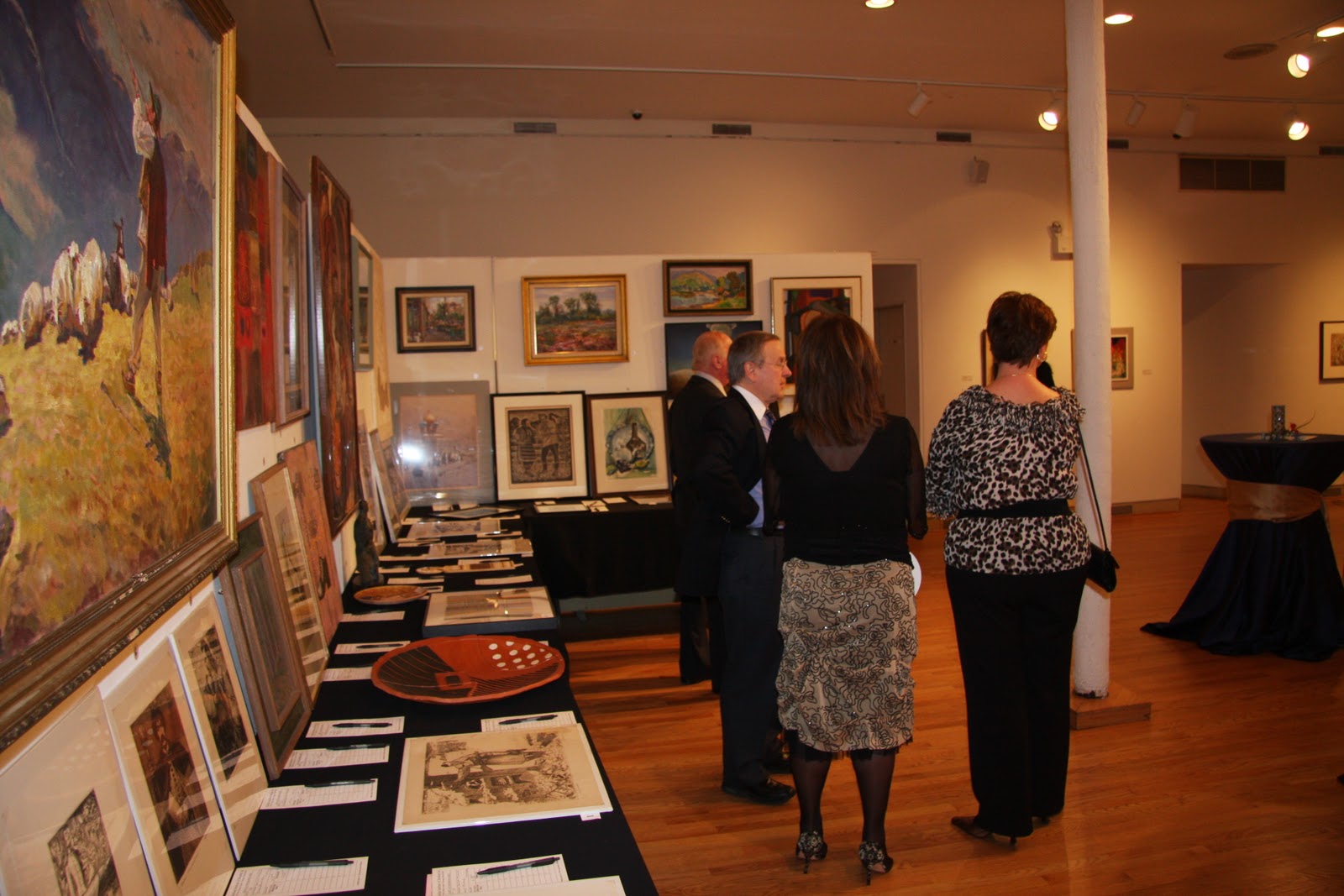
Ukrainian Institute of Modern Art - 2011 Auction


The Ukrainian Institute of Modern Art
held its annual fund raising auction on Saturday
 March 5th 2011 in the Institute’s gallery at
2320 West Chicago Avenue, Chicago, Illinois. 
 

One of the highlights of the evening was
the auction of the recently created statue "Taras"
 manufactured by “Kozak Designs” of Chicago.


With a starting bid of one hundred dollars, interest in “Taras” quickly escalated up to a final bid of four hundred fifty dollars
 (four and a half times the starting bid), raising the highest percentage of any item being auctioned that evening.


Kozak Designs was pleased to donate 100% of all proceeds to
The Ukrainian Institute of Modern Art
so that it may continue to showcase
quality art in the community.


Welcome to Kozak Designs! We are a company dedicated to bringing you the finest Ukrainian Kozak Warrior collectibles! 

Our new line of collectibles will feature everything you ever wanted in an authentic Kozak statue: breathtaking detail, action oriented poses and historical accuracy. After years of shopping for Kozak statues worldwide, we never found the kind of quality miniature sculptures that truly satisfied us. Although we each owned a collection of Kozak statues that were adequate, they all left us wanting for more: More detail, more accuracy and more action! We never found what we were truly looking for, so we decided to take matters into our own hands by creating the Kozak Designs Company. Our statues reflect a proud Ukrainian heritage and display Kozaks worthy of bearing the Tryzub! We will continue to painstakingly research our designs so that our statues reflect historical accuracy. Kozak Designs is currently planning a line of limited edition collectibles that will look perfect in your home or office and will also make a great gift for the Kozak Warrior in your family!

Our blog will debut upcoming statues and collectibles as we are in production. We encourage you to offer your opinions and comments during the design process as we expand our line, so be on the lookout for opportunities to share your input. You can leave comments to share your thoughts with others. In addition to collectibles, we will also talk about all things Kozak! So please follow our blog, share with friends and most importantly, buy a Kozak Designs statue as we continue to reveal more exciting Ukrainian collectibles!